
How often does a septic tank need cleaning?
The honest answer is: it depends on your tank and your household, but 3 to 5 years is the range most residential systems fall into. A family of six fills a tank faster than a retired couple in the same size house. Garbage disposals add solids and shorten the interval too. If you've added a bedroom, a bathroom, or a rental unit since the tank went in, the math changes and you may need septic pumping service more often than the last owner did. North Miami's older neighborhoods often have tanks installed decades ago, sized for a smaller household than the one living there now. When in doubt, get it checked rather than guess. A tank that backs up in your yard is a worse afternoon than a scheduled visit from septic tank cleaning. Restaurants and commercial kitchens run on a different clock entirely. A grease interceptor gets pumped when fats, oils, grease and solids reach 25 percent of the liquid depth, which can happen in weeks, not years, depending on volume. That's a separate service from residential septic work; see grease trap pumping if that's your situation.
What are the warning signs I need to pump sooner?
Slow drains in multiple fixtures at once, gurgling in the pipes, standing water near the drain field, or a sewage smell in the yard all point to a tank that's full or a field that's failing. Any one of these on its own could be something else. All of them together usually means the tank needs attention now, not next season. Check septic tank warning signs for the fuller list. Waiting it out rarely saves money. A tank that overflows into the drain field can damage the field itself, which costs far more to fix than a pump-out ever would. If you're planning renovation work, a home addition, or hosting an event and worried about capacity, a holding tank rental can take the load off an aging system temporarily. Homeowners doing a renovation sometimes lean on a home renovation porta potty instead, which keeps crew traffic off the septic system entirely during heavy-use construction weeks.
What does septic pumping cost in North Miami?
Pricing depends on tank size, access, and how long it's been since the last service. Here's what typical jobs run:
| Service | Duration | Typical Price |
|---|---|---|
| Septic pumping | Single day visit | $150 to $300 |
| Septic service | Weekend call | $50 to $150 |
These are starting ranges, not quotes; a tank buried under a deck or hard to reach with a truck will run higher. For the full cost breakdown, see septic tank pumping cost. If your tank backs up outside business hours, emergency septic service is the faster route than waiting for a standard appointment. Some properties in North Miami sit close enough to the road that access isn't a problem; others need longer hose runs, which affects the visit.
Do construction sites and events need a different plan?
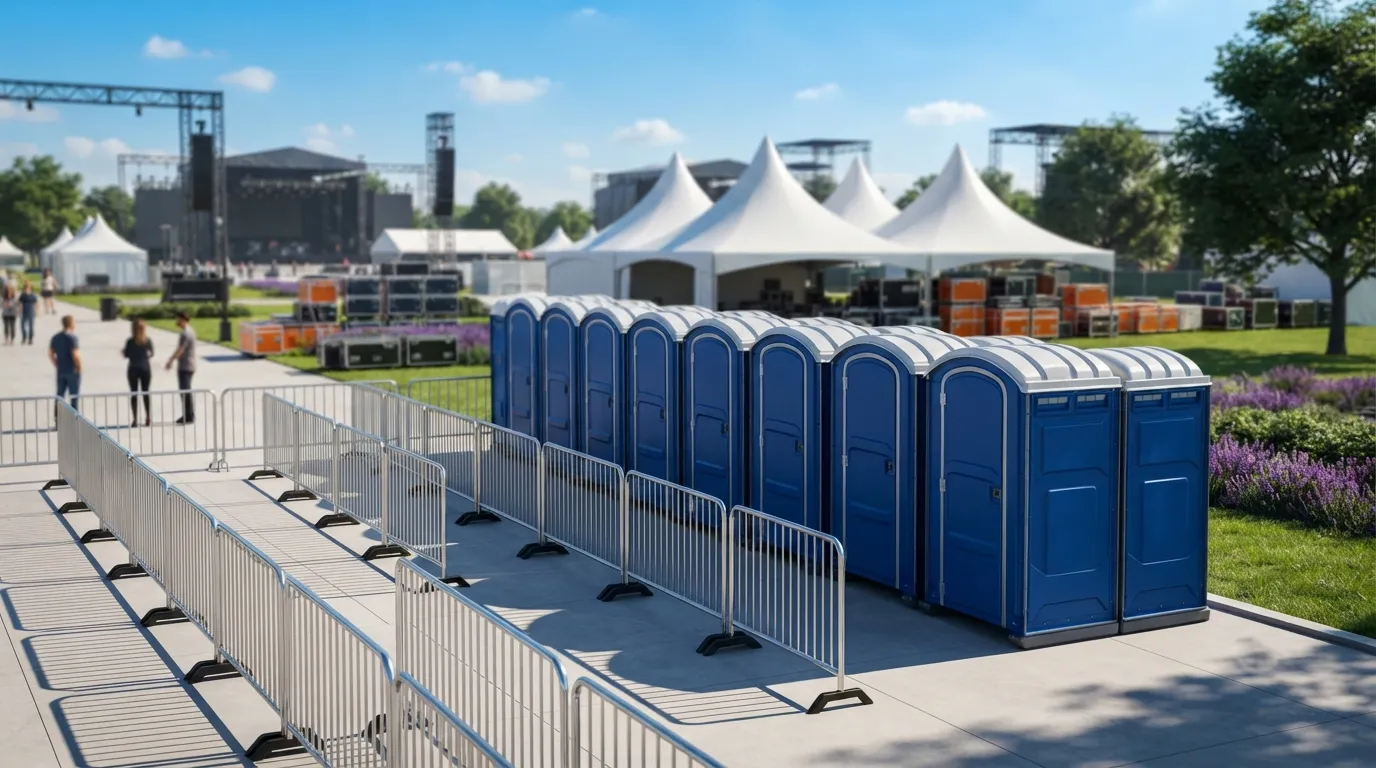
Yes. A job site or event isn't running a septic system at all most of the time; it's running portable units instead, and that changes the math completely. OSHA 1926.51(c) sets the toilet ratio for construction crews: one facility for 20 workers or fewer, then additional units as headcount climbs past that. That's a headcount rule, not a pumping schedule, but it matters because more units means more service stops. If you're staffing a job site, start with construction site services or work out your count with how many porta potties do i need. Weddings, festivals, and races follow a different curve entirely, driven by guest count and event length rather than daily occupancy; see event restroom rental or wedding restroom rental for those numbers. None of that replaces a septic tank on a residential property, but if you're hosting a large gathering on a property with a private septic system, renting units for the day protects the tank from a one-time surge it wasn't sized for.
Homes near North Miami Beach, 2.6 miles north, and Miami Shores, 2.8 miles south, tend to share similar tank ages and soil conditions, so the same 3 to 5 year guidance generally applies across that stretch. Properties further out toward Aventura, 6.1 miles northeast, sometimes have newer systems installed under different code updates, which can stretch the interval slightly. North Miami Porta Pros handles both the septic side and the portable sanitation side, so if a property needs one or the other, or both at once during a renovation, it's one call either way. See service areas for full coverage, or go straight to request a quote if you already know what you need.
How do I know my tank size?
Check your permit records or ask the installer if you know who did the work; a standard residential tank runs around 1,000 gallons, but larger homes sometimes have 1,250 or 1,500 gallon tanks. If you can't find records, a pumping technician can often estimate it during the visit based on the lid size and tank shape.
Can I extend the time between pumpings?
Somewhat. Cutting back on garbage disposal use, spacing out laundry loads, and avoiding flushing wipes or grease all slow solids buildup. It won't turn a 3 year tank into a 6 year one, but it helps you land on the longer end of that range instead of the shorter one.
What happens if I never pump it?
Solids eventually clog the drain field, and once that happens, you're looking at a field repair or replacement instead of a routine pump-out. That's a much bigger job and a much bigger bill than staying on schedule ever is.
Does a bigger household mean more frequent pumping?
Yes, generally. More people means more water and more solids going into the tank daily, which fills the sludge layer faster. A family of six on a standard tank may need service closer to the 3 year mark rather than the 5 year mark.
Is there a difference between septic and grease trap schedules?
Yes, and they're not related. Residential septic tanks run on a multi-year clock, while grease interceptors fill based on cooking volume and can need pumping in weeks. Restaurants should check grease trap pumping separately from any home septic schedule.

Next step
Get a delivery date
Tell us the address, the dates and the headcount. We size the order and confirm the route.