What does OSHA require for handwashing on a job site?
29 CFR 1910.141(d)(2) is specific: washing facilities need soap and towels or a hand drying device, and hand sanitizer alone does not satisfy it. That rule covers general industry. If your crew works construction and handles paints, coatings, herbicides or insecticides, OSHA 1926.51(f)(1) kicks in separately, requiring washing facilities for that contaminant exposure. North Miami Porta Pros sets up handwashing station rental units built for both cases, stocked with real soap and paper towel dispensers rather than gel alone. A lot of contractors pair a station with portable toilet rental on the same delivery, since OSHA 1926.51(c) governs toilet counts and inspectors tend to check both at once. If you're unsure which rule applies to your crew, our handwashing station requirements guide breaks down the difference between general industry and construction categories, and the OSHA portable toilet requirements page covers the toilet-side math in more depth.
How many handwashing stations does a North Miami job site need?
There's no fixed station-per-worker count in the OSHA text itself, but ANSI/PSAI Z4.3 sets the baseline service interval most local companies plan around: one service visit per week supports up to 10 users over a 40 hour week. Crews larger than that usually add a second unit rather than stretch one station thin. We size North Miami sites the same way we size standard porta potty rental counts, using worker headcount and shift length. A 40-worker crew doing paint or coating work, for example, needs washing facilities under 1926.51(f)(1) in addition to whatever toilet ratio applies under 1926.51(c). Our how many porta potties do I need page runs the math for combined toilet and handwash counts, and it's worth checking before you order for a multi-week build.
Do food vendors and farm operations need different stations?
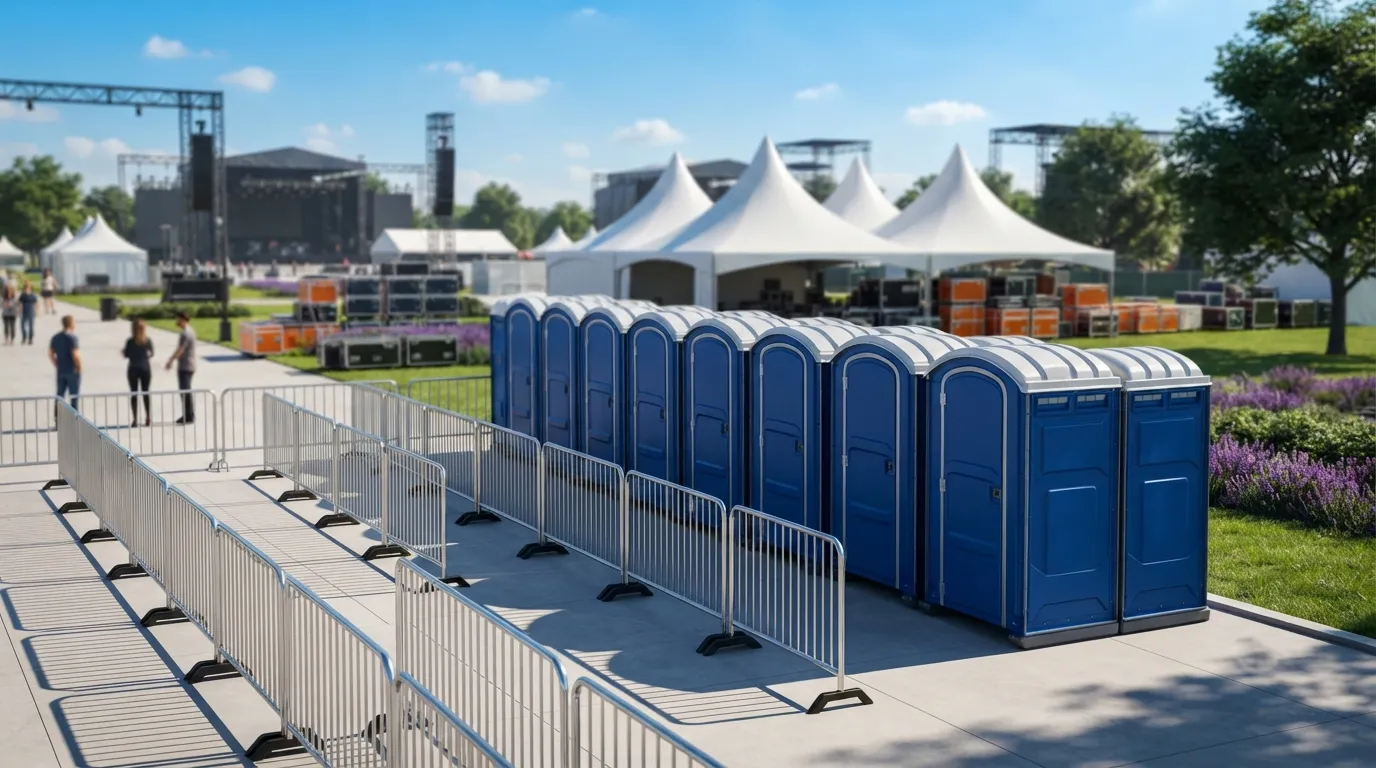
Yes. Farm and field labor falls under OSHA 1928.110, which requires potable water, toilets and handwashing within a quarter mile walk of the work area, at one facility per 20 employees. That's a tighter proximity rule than most construction sites deal with. Growers and packers running farm and agricultural restrooms in North Miami need stations placed close enough that workers aren't losing paid time walking to wash up. Food vendors at markets or fairs have a separate practical concern: grease, raw food handling and frequent hand contact. We treat those setups more like event restroom rental jobs, pairing a portable sink rental with extra service visits rather than relying on a single weekly pump-out. Anyone running a booth near North Miami should also check with the vendor coordinator about placement, since aisle width and fire lane clearance often dictate where a station can sit.
Where should handwashing stations be placed on site?
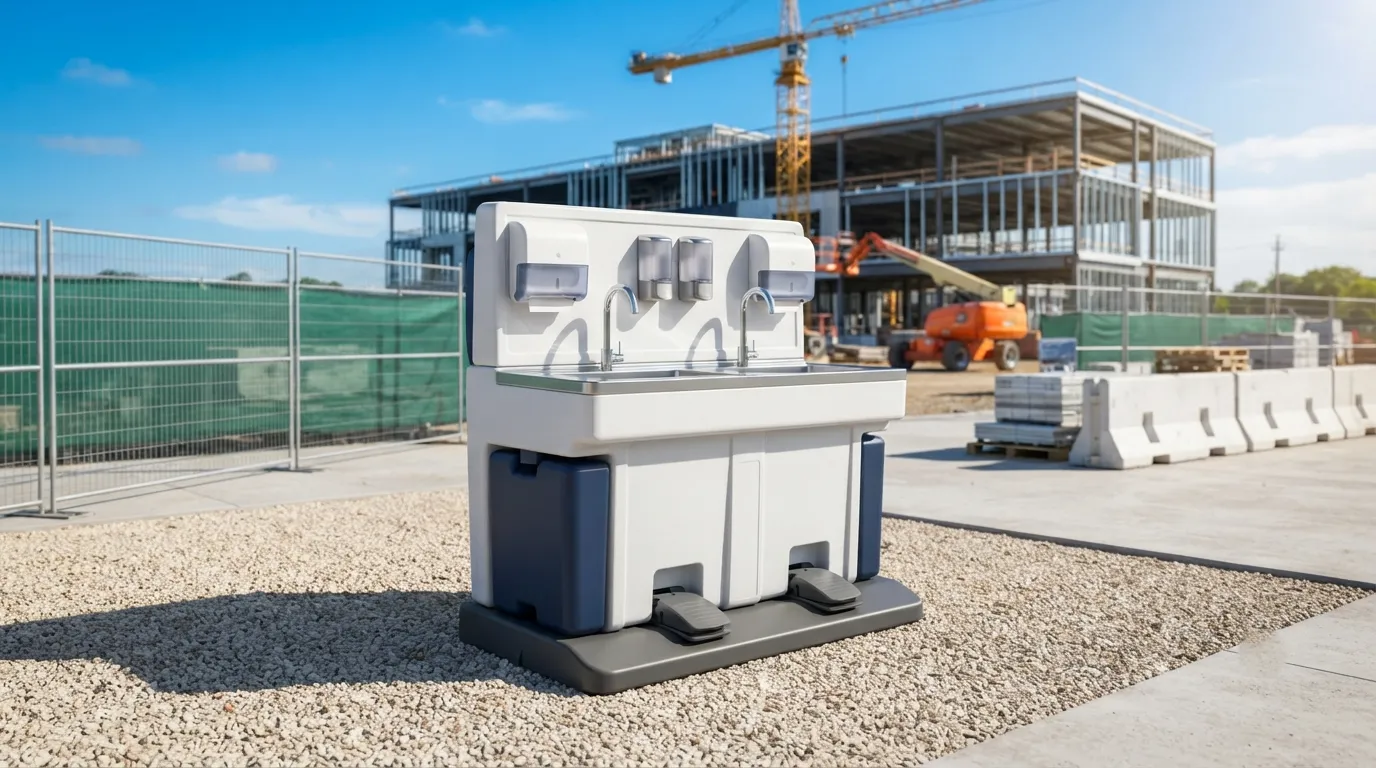
Placement rules borrow from accessibility standards even when a project isn't formally ADA-triggered. ADA Standards section 403.5.1 calls for a 36 inch clear route to any accessible unit, and section 304.3.1 requires a 60 inch turning circle at the fixture itself. If your project includes an ADA accessible porta potty, pair it with a station that meets the same reach and clearance rules, since ADA Standards section 308.2.1 caps forward reach at 48 inches high. Ground surfaces matter too. Section 302.1 requires stable, firm, slip-resistant footing, which rules out loose gravel or soft turf under a handwash unit. On a paved North Miami lot this is rarely an issue, but on a raw construction pad or a grass event field it needs a plywood pad or compacted base. Our porta potty placement guide covers ground prep in more detail, and it applies to handwash stations the same way it applies to toilets.
Delivery logistics matter here too. A roll-off truck needs about 60 feet of straight clearance behind it, and while that spec is built for roll-off dumpster rental drops, the same access lane usually works for handwash station delivery on a shared site. If you're staging a station near a restroom trailer rental or a bank of porta john rental units, plan one combined delivery route instead of two separate ones. It saves a trip charge and keeps the site less congested during setup.
| service | duration | typical price |
|---|---|---|
| standard porta potty | day | $150 |
| standard porta potty | week | $200 |
| delivery fee | day | $150 |
Does hand sanitizer count as a handwashing station?
No. 29 CFR 1910.141(d)(2) specifically requires soap and towels or a hand drying device, and sanitizer gel doesn't meet that standard on its own. A hand sanitizer station rental works as a supplement near entrances, but it can't replace a real washing facility on a job site inspection.
Can a handwashing station be combined with a porta potty delivery?
Yes, and most North Miami crews do exactly that. Ordering both on one trip usually saves a separate delivery fee, and it keeps servicing on the same weekly schedule as your portable restroom rental units.
What's the difference between 1926.51(f)(1) and general sanitation rules?
1926.51(f)(1) applies only when workers use paints, coatings, herbicides or insecticides, or face similar contaminant exposure. General toilet and sanitation counts fall under 1926.51(c) instead, which is a separate, broader requirement.
Do farm operations near North Miami need a different setup?
Yes. OSHA 1928.110 requires field sanitation facilities within a quarter mile walk of hand-labor workers, at one facility per 20 employees. That's tighter than most construction site placement rules.
Is placement in the public right of way allowed in North Miami?
That needs confirming directly with the city before you set anything at the curb or sidewalk edge. Contact North Miami Porta Pros and we'll help you sort out placement before delivery day.
Next step
Get a delivery date
Tell us the address, the dates and the headcount. We size the order and confirm the route.